


Our Blog
Vertical Gardens and Living Walls for DFW Backyards
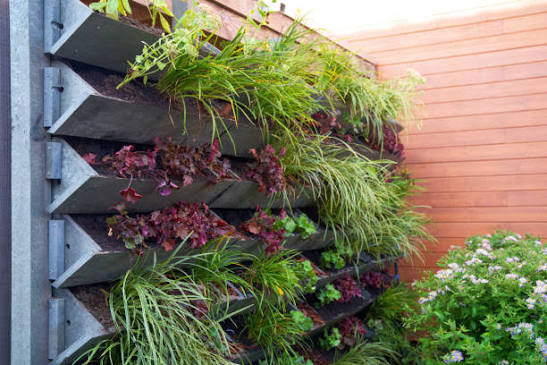
For homeowners with limited horizontal yard space but a genuine desire for more greenery and natural visual interest in their backyard living space, vertical gardens and living walls offer a way to incorporate significant plant life without requiring the ground-level footprint traditional garden beds demand, making this an increasingly popular solution for maximizing green space in smaller DFW backyards.
What Vertical Gardens and Living Walls Actually Are
Vertical gardens and living walls involve growing plants in a vertical orientation, typically using specialized planting systems attached to an existing wall, fence, or freestanding structure, allowing significant plant density and variety within a fraction of the ground-level space traditional gardening would require for equivalent plant coverage.
Types of Vertical Garden Systems
Modular panel systems use individual planting modules or pockets that attach to a wall or frame structure, allowing flexibility to arrange and rearrange plants as desired, and often making individual plant maintenance or replacement more straightforward than some other vertical gardening approaches.
Pocket or fabric-based systems use fabric planting pockets attached to a support structure, offering a more flexible, often more affordable entry point into vertical gardening compared to more elaborate modular panel systems.
Trellis-based climbing plant systems use traditional climbing or vining plants trained to grow vertically along a trellis or similar support structure, offering a more organic, naturalistic vertical greenery approach compared to the more structured, contained plantings of panel or pocket systems.
Freestanding vertical garden structures provide vertical planting opportunities independent of an existing wall or fence, useful for creating a green feature in open yard areas without requiring an existing vertical surface to attach to.
Why Vertical Gardens Work Well in North Texas
Vertical garden systems can be designed with drought-tolerant, heat-resistant plant selections well-suited to North Texas's climate, allowing homeowners to enjoy significant greenery without the water demands that a larger traditional ground-level garden might require, particularly relevant given periodic water use considerations during the hottest, driest stretches of North Texas summers.
Considerations for Successful Vertical Gardens in This Climate
Irrigation system design deserves particular attention, since vertical garden systems typically require more consistent watering than ground-level plantings given their exposed positioning and generally more limited soil volume per plant, making an appropriately designed irrigation system — often drip irrigation specifically suited to vertical applications — important for successful long-term plant health.
Sun exposure management varies significantly based on a vertical garden's specific orientation and placement, with south or west-facing installations receiving considerably more intense afternoon sun exposure than north or east-facing placements, affecting appropriate plant selection for each specific installation location.
Plant selection for vertical applications should prioritize species genuinely suited to both vertical growing conditions and North Texas's climate extremes, rather than simply adapting plants better suited to traditional ground-level growing conditions without considering how vertical positioning changes their sun, water, and soil volume circumstances.
Combining Vertical Gardens With Other Backyard Living Elements
Vertical gardens work particularly well combined with other backyard living features — providing a green backdrop for an outdoor kitchen or dining area, adding privacy screening while incorporating living greenery rather than a purely structural privacy solution, or softening the appearance of a fence or wall that might otherwise feel visually stark within an overall backyard design.
Maintenance Considerations for Vertical Gardens
Beyond irrigation, vertical gardens require periodic maintenance including pruning, occasional plant replacement for any that don't thrive in their specific vertical positioning, and general system upkeep depending on the specific vertical garden structure chosen, representing an ongoing maintenance commitment worth understanding before installation rather than assuming vertical gardens require meaningfully less attention than traditional gardening simply due to their compact footprint.
Cost Considerations for Vertical Garden Installations
Vertical garden system costs vary considerably based on the specific system type, size, irrigation integration, and plant selection, generally representing a moderate investment that delivers significant visual impact relative to the ground-level footprint required, particularly valuable for homeowners specifically prioritizing greenery within a limited available backyard space.
Bringing Greenery to Small DFW Backyards
For homeowners who've assumed their smaller backyard couldn't accommodate meaningful garden greenery, vertical gardens and living walls offer a genuine solution for incorporating significant plant life and visual interest, working with a backyard's vertical surfaces rather than requiring the horizontal footprint traditional gardening approaches typically demand.

Interested in adding a vertical garden or living wall to your backyard? Book a consultation and let's design something that fits your space. Book a Free Inspection



Find Us On


